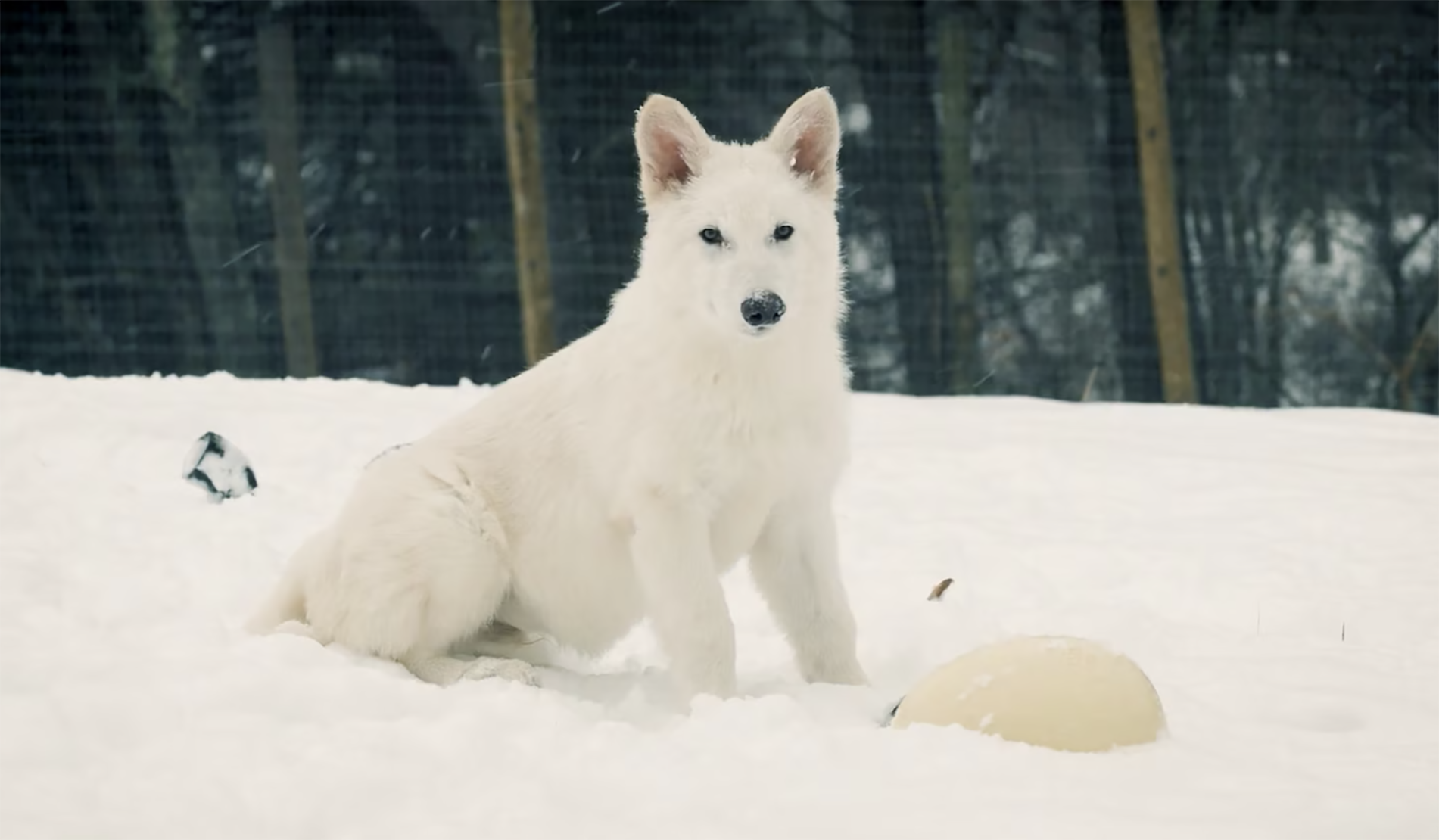
In a groundbreaking achievement, scientists at Colossal Biosciences have announced the birth of three wolf pups—Romulus, Remus, and Khaleesi—that exhibit key traits of the extinct dire wolf (Aenocyon dirus). This milestone represents a significant advancement in the field of de-extinction.
The dire wolf, which roamed North America and became extinct approximately 10,000 years ago, has long captivated scientists and the public alike. To recreate its characteristics, researchers extracted ancient DNA from fossils dating back 13,000 and 72,000 years. They identified 20 specific genetic variations that distinguished dire wolves from their closest living relatives, gray wolves. Utilizing CRISPR gene-editing technology, these genes were introduced into gray wolf cells. The edited nuclei were then implanted into enucleated ova, developed into embryos, and carried to term by surrogate domestic dogs. This process culminated in the birth of the three pups, which display physical attributes reminiscent of the dire wolf, such as larger body size and distinct skull morphology.
Despite the excitement surrounding this achievement, some experts urge caution. They argue that while the pups exhibit dire wolf-like traits, they are essentially genetically modified gray wolves rather than true replicas of the extinct species. The debate underscores the complexities and ethical considerations inherent in de-extinction efforts.
Colossal Biosciences, co-founded by entrepreneur Ben Lamm and geneticist George Church, has positioned itself at the forefront of de-extinction research. Beyond the dire wolf project, the company has ambitious plans to revive other extinct species, including the woolly mammoth and the Tasmanian tiger. Their work has attracted significant attention and investment, reflecting a growing interest in the potential of genetic technologies to address biodiversity loss.
The announcement has also garnered interest from notable public figures. NFL legend Tom Brady and actor Joe Manganiello are among those who have expressed support for Colossal’s endeavors, highlighting the intersection of science, conservation, and popular culture.
As the scientific community continues to explore the possibilities and implications of de-extinction, the birth of these wolf pups serves as a testament to the rapid advancements in genetic engineering. It also prompts important discussions about the role of humans in shaping and restoring ecosystems, the definition of species authenticity, and the ethical boundaries of such interventions.