

Tim Curry, the legendary British actor whose extraordinary career gave us one of cinema’s most unforgettable cult icons, one of horror’s most terrifying villains and some of the funniest characters ever committed to film, has died. He was 80.
Curry died at his home in Los Angeles on Tuesday, August 25, according to his longtime manager and friend Marcia Hurwitz. At this time, no official cause of death has been disclosed. Curry suffered a major stroke in 2012 that left him partially paralyzed and using a wheelchair, but there has been no announcement connecting the stroke or its complications to his death.
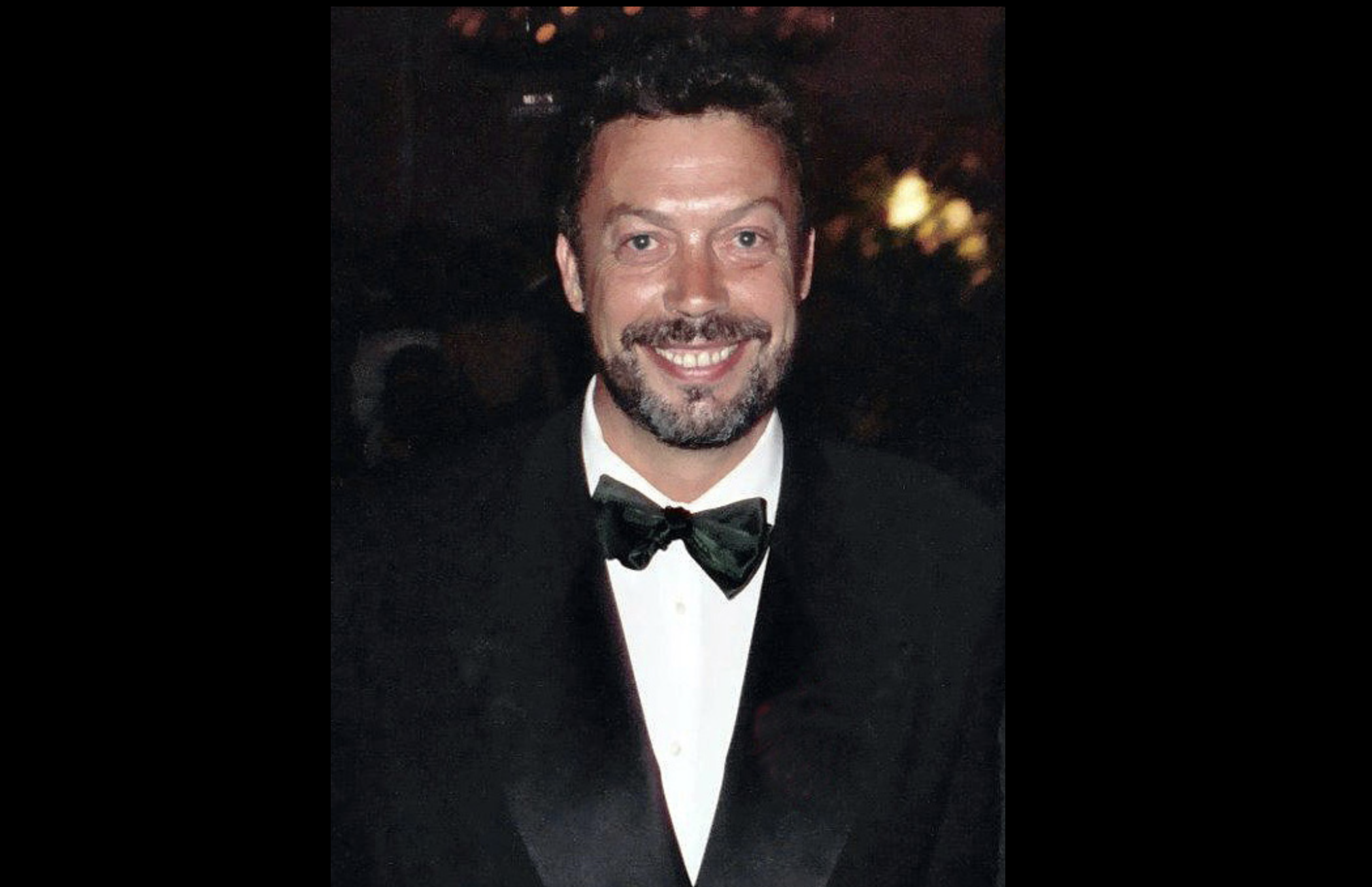
For millions of people, Tim Curry will forever be Dr. Frank-N-Furter.
It is difficult now to appreciate just how audacious The Rocky Horror Picture Show was when it arrived in 1975—or how completely Curry owned it. Seductive, funny, menacing, outrageous and utterly fearless, his Frank-N-Furter wasn’t simply a memorable movie character. He became a cultural icon.
Curry had originated the role two years earlier in Richard O’Brien’s The Rocky Horror Show at London’s Royal Court Theatre. The production eventually traveled to Los Angeles and Broadway before Curry brought Frank-N-Furter to the screen alongside Susan Sarandon, Barry Bostwick and Meat Loaf. citeturn0news0turn0search5
The movie initially struggled to find an audience. Then something remarkable happened. Midnight screenings transformed Rocky Horror into a communal experience. Audiences dressed as the characters, shouted at the screen, acted out scenes and returned again and again. Half a century later, the movie remains alive in a way very few films ever manage to be.
It also became a refuge for generations of people who felt different. Long before mainstream entertainment regularly talked about gender fluidity, sexual freedom or the joy of refusing to conform, Curry strutted across the screen in fishnets and heels with absolute confidence. Rocky Horror became especially meaningful to generations of LGBTQ+ audiences and outsiders who saw something liberating in its unapologetic weirdness.
But reducing Tim Curry to Frank-N-Furter would ignore the remarkable range of his career.
For horror fans, he became something completely different in 1990 when he played Pennywise in the television adaptation of Stephen King’s It. Curry managed to make a clown genuinely terrifying for an entire generation. Beneath the makeup was that unmistakable Curry combination: humor, intelligence and menace. He could make you laugh and make you deeply uncomfortable almost simultaneously.
Then there was Clue.
As Wadsworth, the increasingly frantic butler at the center of the 1985 murder mystery, Curry delivered one of the great comic performances of the decade. Like Rocky Horror, Clue wasn’t initially the phenomenon it later became. It grew into one. Today it is endlessly quoted and watched, and Curry’s breathless performance—particularly during the film’s manic explanations of its various endings—is central to why it remains so beloved.
His gallery of memorable characters seemed endless: Darkness in Ridley Scott’s Legend, Rooster Hannigan in Annie, the suspicious Plaza Hotel concierge in Home Alone 2: Lost in New York, Cardinal Richelieu in The Three Musketeers and Long John Silver in Muppet Treasure Island.
And then there was that voice.
Curry became one of the most prolific voice actors of his generation, lending his unmistakable baritone to hundreds of animated productions, films, audiobooks and video games. He was Nigel Thornberry in The Wild Thornberrys and Captain Hook in Peter Pan and the Pirates, a performance that earned him a Daytime Emmy. His voice work also included Star Wars: The Clone Wars and The Adventures of Jimmy Neutron, Boy Genius. citeturn0news0turn0search5
He was also an accomplished stage actor whose theatrical career would have been impressive even without Rocky Horror. Curry received three Tony Award nominations—for Amadeus, My Favorite Year and Spamalot. His King Arthur in the original Broadway production of Spamalot introduced yet another generation to his particular mixture of elegance, absurdity and impeccable comic timing.
Less remembered today is that Curry was also a recording artist. He released three studio albums between 1978 and 1981, and his wonderfully eccentric single “I Do the Rock” reached the Billboard Hot 100.
His life changed dramatically in July 2012 when he suffered a severe stroke. It left him partially paralyzed and dependent on a wheelchair. Curry later wrote candidly about the experience and his difficult recovery in his 2025 memoir, Vagabond.
But he didn’t disappear.
Curry continued doing voice work and making public appearances. In 2016, he returned to the world that had made him famous, appearing as the Criminologist in Fox’s television remake of The Rocky Horror Picture Show. He continued meeting fans at conventions and events, and after years away from live-action film appeared in the 2024 horror movie Stream.
Perhaps most touching is that in his later years Curry seemed increasingly aware of just how deeply his work had become intertwined with people’s lives.
His characters were rarely ordinary. They were outsiders, eccentrics, villains, monsters, pirates, clowns, kings and people who refused to disappear quietly into the background.
And neither did Tim Curry.
There are actors whose careers can be measured in awards or box-office numbers. Curry’s career is better measured in characters people simply cannot forget. Frank-N-Furter. Pennywise. Wadsworth. Darkness. Nigel Thornberry. Long John Silver.
Even people who don’t immediately recognize Tim Curry’s name often recognize his face, his voice—or the character who frightened them, made them laugh, or made them feel that perhaps being strange wasn’t such a terrible thing after all.
That may ultimately be his greatest legacy.
Tim Curry spent nearly six decades making the unusual irresistible, the frightening entertaining and the outrageous somehow beautiful.
There will never be another quite like him.